
Realise vs. Realize: Which Is Correct?
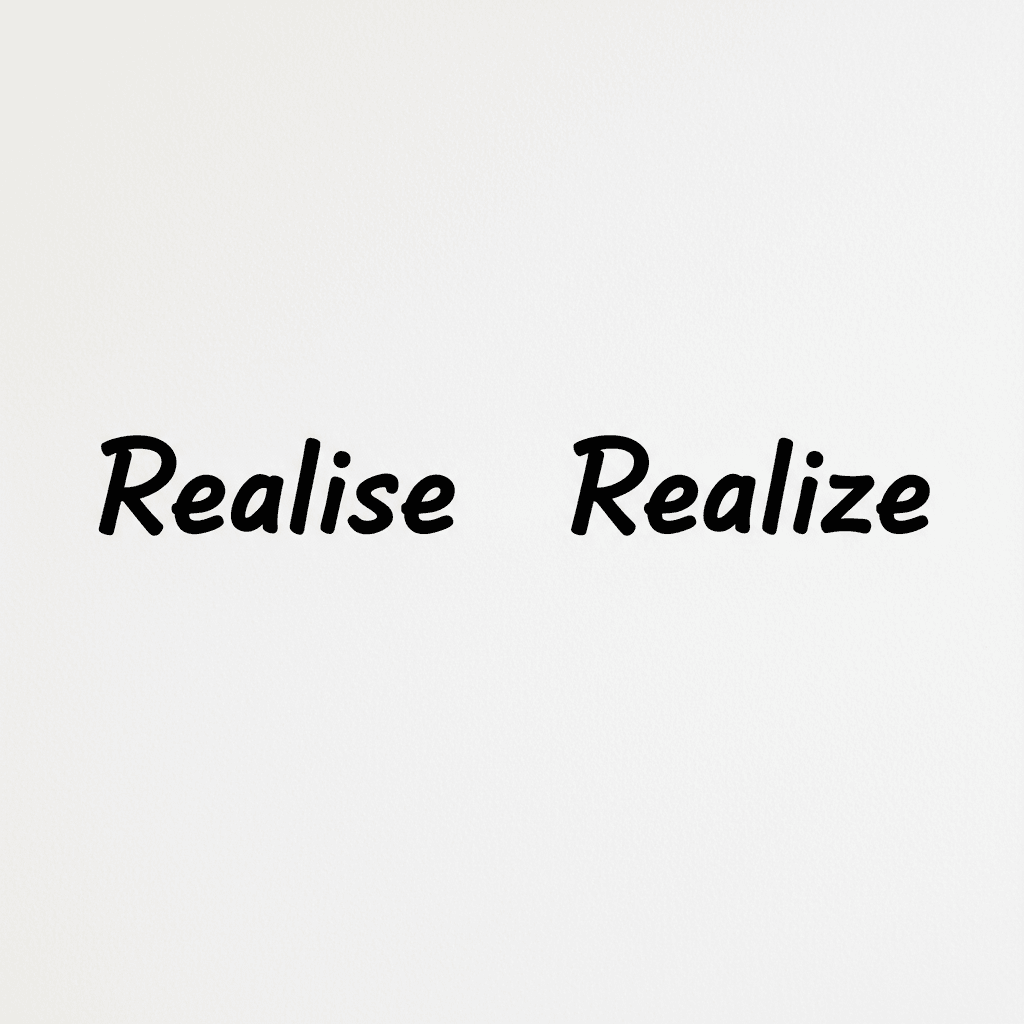
Both realise and realize mean to become aware of something — but the spelling changes depending on where you’re writing.
Here’s the quick rule:
- Realize → American English 🇺🇸
- Realise → British English 🇬🇧
They’re the same word, just with different spelling conventions.
1. Realize: The American Spelling
Meaning
“Realize” means to become aware of, to make something real, or to accomplish something.
It’s the standard form in American English and widely used in Canada and internationally online.
Examples (10 total)
- I didn’t realize how late it was.
- She realized her mistake immediately.
- They realized their dream of starting a business.
- He finally realized the truth.
- I realized that I left my keys at home.
- We realized our goal after months of work.
- She realized the importance of family.
- The company realized a huge profit last quarter.
- He realized how lucky he was.
- They realized they were lost.
🧠 Tip:
If you write color instead of colour or organize instead of organise, use realize.
2. Realise: The British Spelling
Meaning
“Realise” has the exact same meaning as realize, but it follows British English spelling rules.
You’ll find it more common in the U.K., Australia, New Zealand, South Africa, and India.
Examples (10 total)
- I didn’t realise it was your birthday.
- She realised her dream of becoming a teacher.
- He realised that he’d made an error.
- We realised how important teamwork is.
- They realised they were being followed.
- I suddenly realised I forgot my wallet.
- She realised her true potential.
- He realised it was time to move on.
- The students realised how much they’d learned.
- The team realised the project’s success.
🧠 Tip:
If you spell colour, organise, or centre with British style, use realise.
3. Quick Comparison Table
| English Type | Correct Spelling | Example | Notes |
|---|---|---|---|
| American English | Realize | I realized my dream. | Uses “-ize” endings. |
| British English | Realise | I realised my dream. | Uses “-ise” endings. |
| Formal British English (Oxford style) | Realize | I realized my dream. | Oxford dictionaries prefer “-ize.” |
4. A Note About Oxford English
Interestingly, the Oxford University Press (and many academic British sources) prefer -ize endings even in the U.K.
So, realize is technically also correct in Oxford British English — though realise remains more common in everyday British writing.
💡 Summary:
✅ Realize — American & Oxford British English
✅ Realise — Standard British English
5. How to Remember
👉 Realize = American
👉 Realise = British
💡 Memory Trick:
The “z” in realize looks like the letter Z in “U.S.A.” — that’s your clue it’s American.
6. Common Mistakes
❌ I didn’t realized the mistake.
✅ I didn’t realize/realise the mistake.
❌ They were realise they were wrong.
✅ They realised/realized they were wrong.
7. Why It’s Confusing
Both spellings appear all over the internet.
Because global English is mixed online, you might see realize even in British publications and vice versa.
The meaning, pronunciation, and grammar are identical — only the spelling style changes.
Even smart writing assistants like Humanizey can adjust automatically based on your target audience (US or UK).
FAQs
1. Is “realize” wrong in British English?
No — it’s still acceptable, especially in academic or Oxford English.
2. Is “realise” used in America?
Rarely. Americans almost always use realize.
3. Do “realize” and “realise” sound different?
No, they’re pronounced exactly the same.
4. Which one should I use in formal writing?
Follow your region or style guide — realize (US) or realise (UK).
Practice: Choose the Correct Word (“Realize” or “Realise”)
(Answers are listed at the end.)
- I didn’t ___ how late it was getting.
- She finally ___ her goal of becoming a doctor.
- They ___ that honesty is the best policy.
- He ___ he’d made a mistake.
- The company ___ a huge profit.
- We ___ that communication is key.
- I suddenly ___ I’d left my phone at home.
- She ___ her dream through hard work.
- The teacher ___ the potential in every student.
- They ___ it was time to go.
Answers
(Use realize for American English, realise for British English — both are correct!)